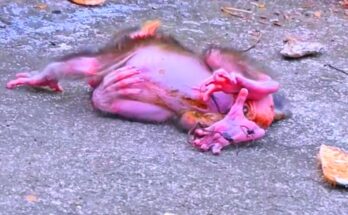
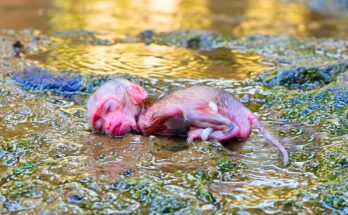
Some of the most meaningful moments in animal life happen quietly, far from the forests and open landscapes we usually associate with wildlife. A tiny baby monkey, still learning about the world around it, can remind us how important patience, gentle handling, and a safe environment are for vulnerable young animals.
In this story, the focus is on caring for a helpless baby monkey while farm animals continue their familiar daily routines. Whether watching, resting, feeding, or moving through their surroundings, animals communicate through their behavior in ways that can be both fascinating and touching. The gentle presence of a caregiver can make a difference, while the natural curiosity of animals offers a glimpse into their individual personalities.
Names such as Cara, Bean, and Babette bring a personal touch to the story, inviting viewers to pay attention to the animals as individuals rather than simply as characters in a video. Their interactions offer an opportunity to appreciate the everyday moments of animal care, the importance of responsible treatment, and the small details that make life on a farm so interesting.
After watching the video, it is worth taking a moment to appreciate the patience that caring for a young animal can require. Baby monkeys are naturally curious, sensitive, and dependent on appropriate care during their early development. Their needs go beyond food and shelter; they also require a suitable environment, careful observation, and support that respects their natural behavior.
The presence of farm animals adds another dimension to the story. Each animal has its own needs, habits, and ways of responding to its surroundings. Although animals may sometimes appear comfortable near one another, their behavior should always be observed carefully. A peaceful moment does not necessarily mean that every animal has formed a lasting bond, but it can still be a beautiful reminder that different species share the same world.
For a baby monkey, human care should always prioritize safety and welfare. In real rescue situations, qualified wildlife professionals can assess the animal’s health, determine its needs, and help ensure that it receives appropriate long-term care. Where possible, rehabilitation should support the animal’s natural instincts and future well-being.
Stories like this encourage us to look more closely at the animals around us. A small gesture of care, a quiet moment of curiosity, or a peaceful scene in the farmyard can inspire appreciation for the living creatures with whom we share our world. The most meaningful animal stories do not need exaggeration; their value lies in thoughtful observation, responsible care, and respect for each animal’s life.