When Sharing Food Becomes a Difficult Moment
For a baby monkey, even a small piece of food can feel important. Staying close to its mother offers comfort and security, but family life in the animal world is not always gentle. Sometimes, ordinary moments can quickly become tense.
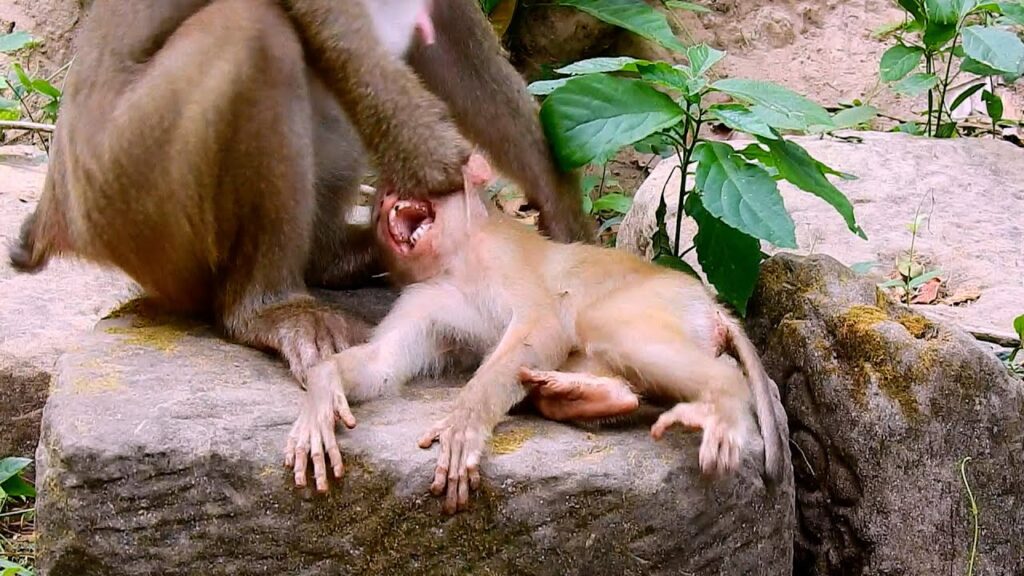
In this video, a mother monkey reaches for food her baby is eating and takes it directly from the little one’s mouth. The interaction appears rough, leaving the baby in a difficult moment as it responds to its mother’s actions. What begins as a feeding moment becomes an uncomfortable reminder that close family bonds can include conflict as well as affection.
Although the scene may be difficult for viewers who care deeply about animals, it also invites us to observe rather than assume. Without knowing exactly what led to the interaction, we cannot be certain why the mother behaved this way or how the baby experienced it.
A Closer Look at Mother-and-Baby Monkey Behavior
Watching a young animal experience a tense interaction with its mother can stir strong emotions. We naturally want to see the little one protected, especially when the encounter appears painful or distressing. In this scene, the mother’s action seems harsh, and the baby’s response draws attention to the vulnerability of young monkeys.
However, one moment cannot tell us everything about a mother and her baby. Wild animals respond to their surroundings, food availability, social relationships, and individual circumstances. Taking food from another monkey can occur within their social interactions, but the specific reason for this behavior cannot be established from the scene alone.
For viewers, the important thing is to recognize both the baby’s vulnerability and the complexity of animal behavior. Motherhood in the wild does not always look the way we expect, and not every interaction is calm or affectionate.
The video offers a reminder that wildlife deserves thoughtful observation, even when its behavior is difficult to watch. By paying attention to what actually happens rather than assigning motives we cannot confirm, we can better appreciate the complicated lives of animals and the relationships that shape them.