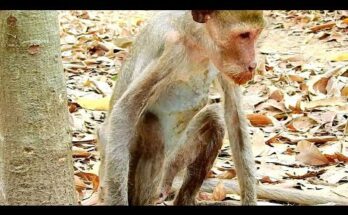
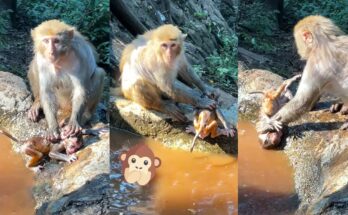
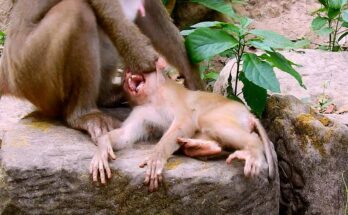
As the footage continues, Amaya’s handling of her newborn remains the central focus. At first, her hold appears loose and uncertain, leaving the tiny infant struggling to stay comfortably positioned. Later, she is seen holding the baby closer against her body, suggesting a change in how she supports the newborn. These visible moments offer a glimpse into the challenges of caring for a fragile infant.
For macaques, close physical contact is important during early life. Newborns depend on their mothers for warmth, nourishment, and protection, and secure contact helps them remain close as their mothers move.
It is important not to mistake uncertainty for deliberate rejection. A brief recording cannot reveal exactly what Amaya is feeling or whether the baby is in danger beyond what the images show. Nor can it establish the newborn’s eventual condition.
Amaya’s first moments with her baby remind us that wildlife behavior can be complicated. The natural world offers tenderness, uncertainty, and difficult beginnings, sometimes all within the same encounter. Watching carefully, without rushing to judgment, allows us to appreciate both the vulnerability of a newborn and the challenges a young mother may face.